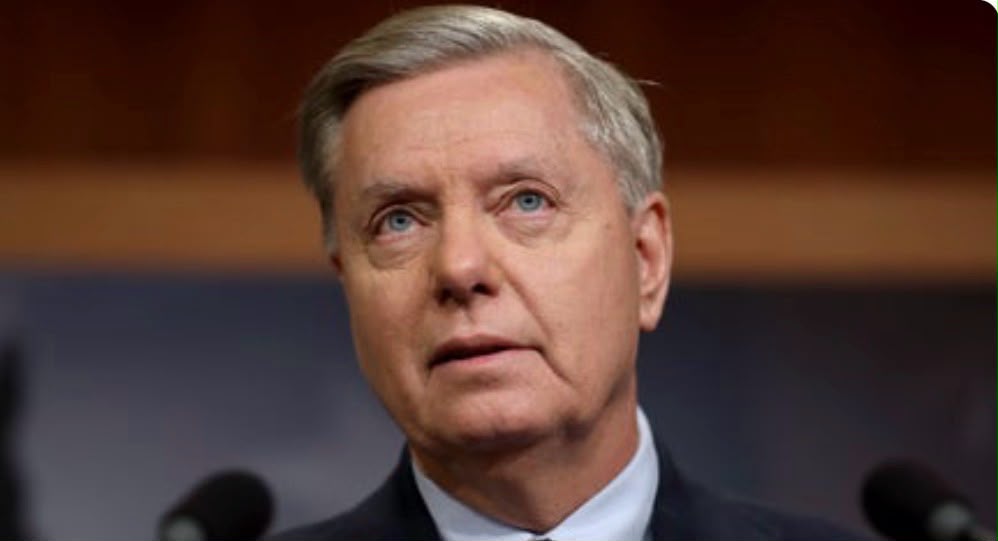
By Hakikul Islam Khokon & Md. Nasir | BAPS NewsU.S. President Donald Trump has revealed that he spoke by phone with Republican Senator Lindsey Graham just hours before the senator’s death, describing him as sounding “a little tired” but otherwise completely normal as they discussed legislative and political matters.In an interview on NBC’s Meet the Press on Sunday, July 12, 2026, Trump said Graham had called him to confirm that work on the proposed “Save America Act” was ready to move forward.”He called me and said everything was set with the Save America Act. He sounded just a little tired, but I never imagined that would be our last conversation,” Trump said.Trump described Graham’s sudden death as a devastating personal loss.”I thought he would live forever,” the president said. “He wasn’t just a colleague—he was like a member of my family. Even when we disagreed politically, our friendship only grew stronger over the years.”According to Graham’s office, the four-term senator from South Carolina died Saturday evening at the age of 71 following what was described as a “brief and sudden illness.” The exact cause of death has not yet been released. U.S. media reported that emergency medical personnel were dispatched to his Washington, D.C., residence before his passing.Graham was one of the Republican Party’s most influential lawmakers. Although he was initially a vocal critic of Trump during the 2016 presidential campaign, he later became one of the president’s closest political allies, playing a key role on issues related to foreign policy and national security.Following the announcement of Graham’s death, political leaders from the United States and around the world expressed their condolences. In a tribute posted on social media, Trump called Graham “a true American patriot” and “one of the finest senators I have ever known.”Graham was also widely recognized for his strong support of stricter immigration enforcement and his firm stance against illegal immigration, positions that made him a prominent voice in debates over U.S. border security and immigration policy.
Thursday, 16 July 2026